
Labels & logistics
GS1 Logistics Labels: A Practical Warehouse Guide
A practical introduction to GS1 logistics labels, SSCC pallet identification, GS1-128 barcodes and warehouse implementation for UK businesses.
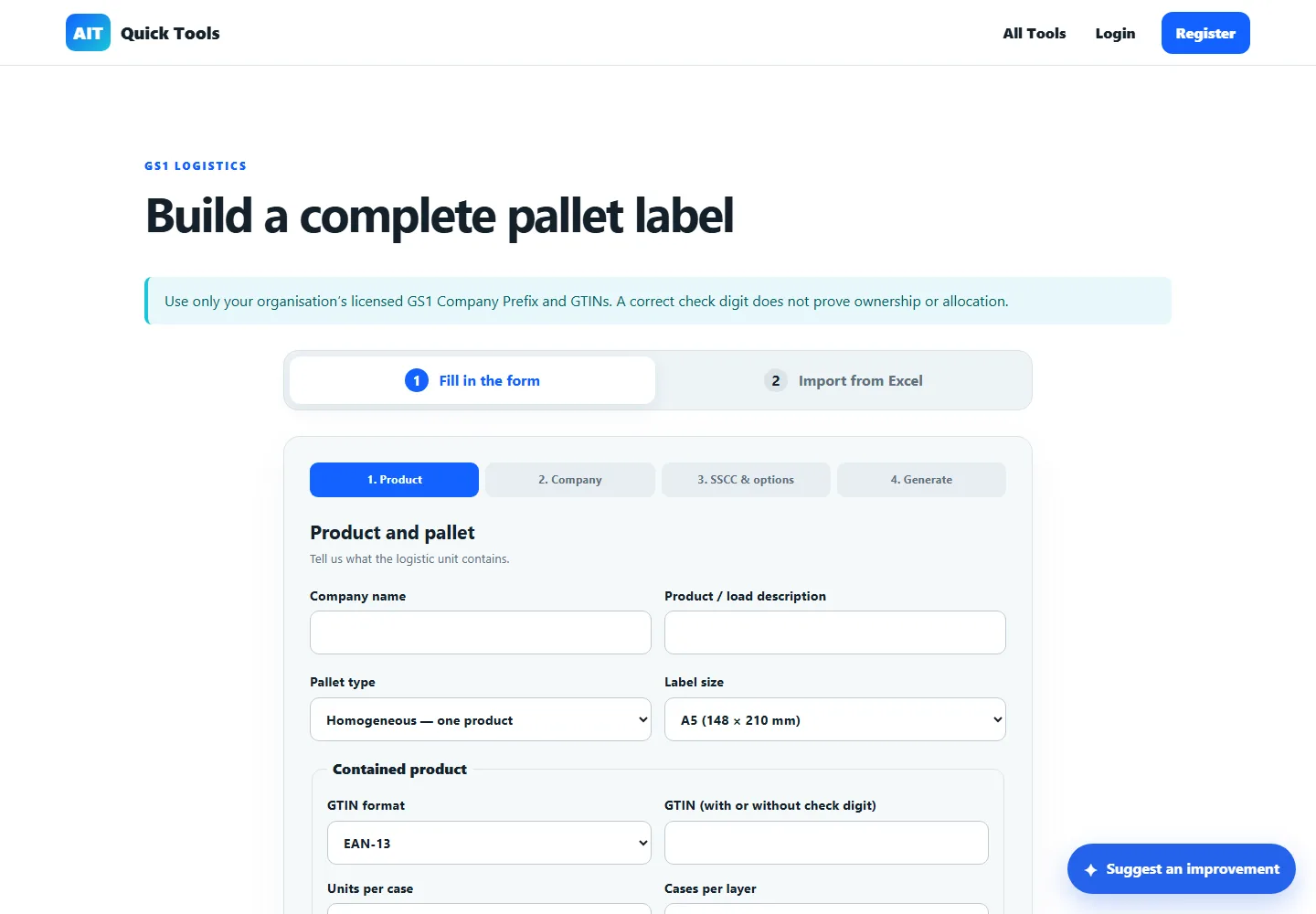
A GS1 logistics label gives a pallet or other logistics unit a globally unique identity that can be scanned as it moves through the supply chain. The central identifier is normally the Serial Shipping Container Code, or SSCC. Good implementation requires more than placing a barcode on paper: the identifier, printed label and business data must remain connected.
What the SSCC identifies
An SSCC identifies a logistics unit rather than a product type. Two pallets containing the same products should still have different SSCCs. The number is encoded in a GS1-128 barcode and can be used by warehouse, transport and customer systems to retrieve the related shipment information.
The organisation assigning the SSCC must ensure that it is unique and generated from the correct GS1 company prefix and serial reference structure.
- One unique SSCC for each logistics unit
- A scannable GS1-128 representation
- Human-readable information for operational use
- A system record linking the SSCC to the pallet or shipment
Information commonly shown on the label
The label may include sender and receiver information, delivery references, product details and dates, depending on the trading relationship and process. GS1 Application Identifiers define the meaning and format of encoded data.
Only required and reliable data should be printed. Adding fields without a clear receiving process creates clutter and increases the chance of inconsistent information.
- SSCC using Application Identifier (00)
- GTIN and quantity where required
- Batch, lot or date information where relevant
- Purchase order, delivery or customer references
Building a reliable label workflow
The operational system should create the SSCC, store the relationship to the physical pallet and produce the print data from the same controlled record. Reprinting should preserve the identifier unless the logistics unit has genuinely changed.
Test with the actual printers, label stock, scanners and receiving partners. Barcode quality, placement and quiet zones matter. A technically valid number is not enough if the printed symbol cannot be scanned reliably in the warehouse.
Frequently asked questions
Common questions
What is the difference between a GTIN and an SSCC?
A GTIN identifies a trade item or product, while an SSCC uniquely identifies a logistics unit such as a specific pallet.
Can the same SSCC be reused on another pallet?
An SSCC must remain unique for the period required by GS1 rules and the relevant business process. It should not be casually reused.
Do all pallet labels need the same information?
No. The required information depends on the trading partner, process and sector, but the SSCC is the core identifier on a GS1 logistics label.